

Best facial sunscreen
When choosing the best sunscreen for your face, there are several important factors to consider. In this article, we provide an overview of the best facial sunscreens and what to look for when searching for the best sunscreen. As if that weren't enough, we give you the best application tips for hot summer days and for using SPF during the winter months.
As red as a lobster
Imagine this: a sun-drenched beach, refreshing cocktails, and a radiant smile on your face. Life can be so beautiful! But wait a minute… Before you completely lose yourself in the summer vibe, let’s talk about sunscreen. Yes, I can hear you sighing already. “Not that nag again telling us how important it is to slather on.” But wait! I promise I’m going to present it in a fun and funny way. So pull your beach chair closer, grab your sunglasses, and prepare for a story that will not only entertain you but also warn you about the dangers of neglecting sunscreen.
Let's be honest, we've all felt the temptation at some point to dive into the sun like a fearless adventurer, without any protection. We think we don't need that sunscreen because we have beautiful olive-colored skin that will never burn. But the sun has a surprising way of reminding us that we are not invincible superheroes. Imagine your face burning red like a shrimp, and not just on your face, but on every piece of skin the sun has touched. You look like a lobster just taken out of a hot pan. Believe me, that is not a fashion trend you want to follow. It is not only painful, but it can also cause serious damage to your skin. Wrinkles, premature aging, and even skin cancer lie in wait for those who brave the sun unprotected. But hey, let's not just focus on the negative side.
Sunscreen can actually be your best friend on a sunny day. It is like a superhero cape that protects you from the sun's harmful rays. With a little application and a wink to the sun, you can enjoy the warm rays without worrying about unwanted sunburn. Don't be afraid to slather yourself in, because the only glow you want is that healthy, radiant complexion. So grab that bottle, unleash your inner Picasso, and create the artwork of protection on your skin. Remember: sunscreen is your secret weapon against the sunburn blues and an indispensable accessory for a carefree summer.
So go out and enjoy the sun's rays, but don't forget to protect your skin. Because when it comes to facial sunscreen, the rule is: apply, apply, apply!

The best face sunscreen contains:
Minimum SPF 30: The Sun Protection Factor (SPF) indicates how well a sunscreen protects against UVB rays. For your face, a sunscreen with an SPF of 30 or higher is generally recommended to provide adequate protection. Make sure the sunscreen you choose has a high enough SPF level.
Broad spectrum protection or PA++++: In addition to the SPF level, it is essential to choose a sunscreen that offers broad-spectrum protection. This means that it protects against both UVA and UVB rays. UVA rays are responsible for premature aging and can also cause skin cancer. Make sure the sunscreen explicitly states that it offers broad-spectrum protection.
Lightweight and non-comedogenicFor the best sunscreen for your face, it is important to choose a lightweight formula that is easy to apply to the skin and absorbs quickly. Look for sunscreens that are specifically formulated for the face and are non-comedogenic, which means they do not clog pores or cause acne.
Are you considering skin type and the desired texture when choosing a sunscreen for your face. If you have oily skin, for example, you might prefer a lightweight gel or liquid formula. For drier skin, a sunscreen with extra hydrating benefits, such as ingredients like hyaluronic acid or ceramides, can be beneficial.
Extra anti-aging ingredients: Some facial sunscreens contain extra skincare benefits, such as antioxidants, anti-aging ingredients, or moisturizing substances. This can help to nourish your skin, to protect against free radicals and to reduce signs of aging. Pay attention to these extra benefits when choosing the best sunscreen for your face.
Ease of use and cosmetic aspects: A good facial sunscreen should be easy to apply and combine well with other skincare and makeup products you use. Choose a sunscreen with a texture and finish that you find pleasant.
The best sunscreen for your face in our range
| Name | SPF | Mineral/Chemical filters | PA grading | Broad spectrum | Lightweight | Streak-free | Color correction | Face/body | Blue light filter | Non-comedogenic | Water resistant | Anti-aging | Contents |
|---|---|---|---|---|---|---|---|---|---|---|---|---|---|
| Nimue-C SPF 40 | 40 | Chemical filters | x | Ja | Ja | Ja | no | Sight | No | Ja | no | Ja | 50ml |
| Medik8 Physical Sunscreen Sun Protection SPF50 | 50 | Mineral filters | x | Ja | ja | no, on beards and some hydra types | no | Face and body | No | Ja | ja | ja | 90ml |
| pH Formula UV Protect SPF30/50 | 50 | Mineral filters | x | Ja | Ja | Ja | no | Sight | No | Ja | no | ja | 50ml |
| pH formula CC Cream SPF30 | 30 | Chemical filters Mineral filters | x | Ja | Ja | Ja | yes, 3 different shades | Sight | no | Ja | no | ja | 50ml |
| Compact Foundation SPF 50+ | 50+ | Chemical filters | x | Ja | Ja | Ja | Foundation | Sight | Ja | Ja | no | ja | 14 grams |
| Thank Me Later Mineral SPF30 | 30 | Mineral filters | x | Ja | Ja | Ja | no | Face and body | No | Ja | no | ja | 100ml |
| Thank Me Later Mineral The Mousse | 4 | Mineral filters | x | no | Ja | Ja | Yes, sparkle | Body | No | Ja | no | ja | 130 grams |
| Brush On Block Touch of Tan SPF 30 | 30 | Mineral filters | x | Ja | Ja | Ja | Yes, complexion | Sight | Ja | Ja | ja | ja | 3.4 grams |
| Medik8 Advanced Day Ultimate Protect | 50 | Chemical filters | PA++++ | Ja | Ja | Ja | no | Sight | Ja | Ja | no | ja | 50ml |
| Suncontrol Sunscreen UV Sensor | 30 | Chemical filters | x | Ja | ja | Ja | no | Sight | No | Ja | no | ja | 100ml |
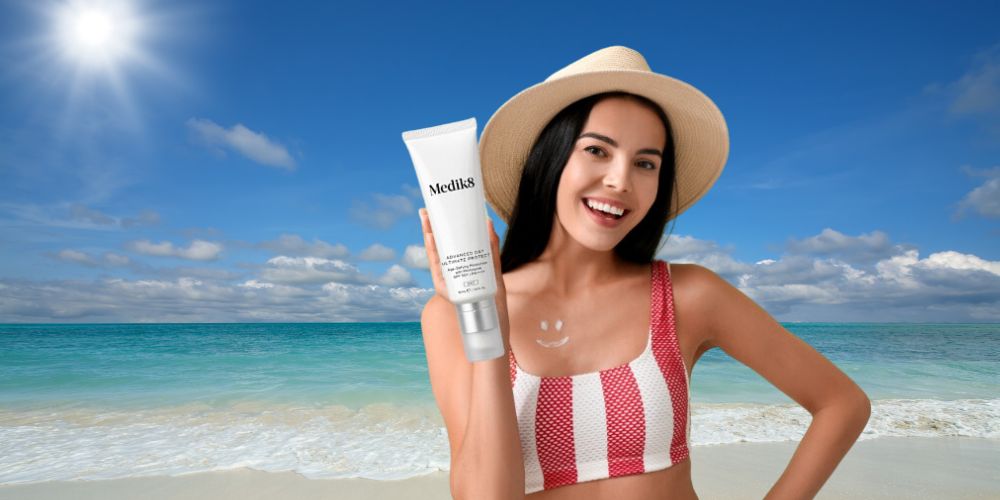
SPF, Broad spectrum and PA ++++ what are the differences
Science has conducted extensive research into sunscreens and the factors that influence their effectiveness, particularly regarding SPF and PA++++. Here is what science says about these aspects:
SPF (Sun Protection Factor):
SPF is a measure of the degree of protection against UVB rays, which are responsible for sunburn. The number associated with SPF indicates how many times longer you can stay in the sun without burning compared to when you are not wearing sunscreen. For example, an SPF 30 means that you are protected 30 times longer than without protection. SPF primarily relates to protection against UVB rays and not UVA rays, which contribute to premature aging and skin cancer. Therefore, it is crucial to also look for broader protection against UVA rays.
Broad Spectrum
Broad spectrum sunscreen refers to a type of sunscreen that offers protection against both UVA and UVB-rays from the sun. Both UVA and UVB rays are harmful to the skin and can cause various types of damage, such as sunburn, premature skin aging, and an increased risk of skin cancer. UVA rays penetrate deeper into the skin and are present all year round, even on cloudy days. They are responsible for skin aging, wrinkles, and the weakening of skin elasticity. UVB rays are stronger than UVA rays and cause sunburn. They are particularly intense during the summer months and in places with a higher UV index.
Broad-spectrum sunscreen protects against both UVA and UVB rays by using active ingredients that block or absorb these rays. There are two main categories of sunscreen filters: physical (mineral) filters and chemical filters. Physical filters, such as zinc oxide and titanium dioxide, reflect the sun's rays and offer immediate protection. Chemical filters, such as avobenzone and octinoxate, absorb the rays and must be absorbed before they are effective.
The use of broad-spectrum sunscreen is important because it provides overall protection against sun damage. It offers protection against sunburn (UVB) and reduces the risk of skin cancer and premature skin aging caused by UVA rays.
PA (Protection Grade of UVA)
PA is a Japanese classification that indicates how good a Sunscreen protects against UVA raysIt is indicated by plus signs, ranging from PA+ to PA++++. The more plus signs, the higher the protection against UVA rays. UVA rays penetrate deeper into the skin and are responsible for long-term effects such as premature aging and DNA damage. It is therefore important to choose a sunscreen with a high PA level, such as PA++++, for better protection against UVA rays.
The best sunscreen for the face is one that works together.
Although SPF and PA measure different aspects of protection, they work together to offer a broader range of protection against sun damage. A sunscreen with a high SPF level and a high PA level (for example, SPF 50+ and PA++++) offers protection against both sunburn and premature skin aging. SPF, Broad Spectrum, and PA are merely indicators of the degree of protection. To achieve optimal protection, it is essential to apply sunscreen generously and evenly, reapply regularly (especially after sweating or swimming), and take other sun protection measures, such as wearing protective clothing and avoiding sun exposure during the hottest hours.
What the difference is between chemical and mineral sunscreens
Both chemical and mineral sunscreens are considered safe for use on the skin. They have been tested and approved by regulatory agencies for cosmetics and sunscreens. However, some people may be more sensitive to certain ingredients in sunscreen.
Hthe most important difference between chemical and mineral sunscreens is the way they work. Chemical sunscreens absorb UV radiation and convert it into heat, while mineral sunscreens reflect and scatter UV radiation. Some people prefer mineral sunscreens because they are less likely to cause skin irritation, while others prefer chemical sunscreens because of their ease of application.
Choosing a sunscreen depends on your personal preference, skin type, and any skin sensitivities. It is always a good idea to read the instructions on the packaging and, if necessary, seek advice from a dermatologist to make the best choice for your specific needs.
Sunscreen with chemical sunscreens
These are made of chemical compounds that absorb UV radiation. These compounds work by converting the UV radiation into harmless heat, which is then dissipated from the skin. With chemical sunscreens, there have been some concerns about possible hormone-disrupting effects of certain chemical compounds, such as oxybenzone. However, there is (yet) no convincing scientific evidence demonstrating that these have effects on human health with normal use of sunscreen.
Nevertheless, if you are concerned, you can opt for sunscreens with alternative chemical or mineral filters. Chemical sunscreens often require a certain amount of time to be effective. After applying a chemical sunscreen, it usually takes about 15-30 minutes for the active ingredients to be fully absorbed and provide protection. During this time, you must wait before exposing yourself to the sun so that the sunscreen has sufficient time to absorb and develop its protective effect.
ESome common ingredients in chemical sunscreens are:
- Oxybenzone
- Avobenzone
- Octinoxate
- Homosalate
- Octisalate
Sunscreen with mineral sunscreens
Also known as physical sunscreens, they contain minerals such as zinc oxide or titanium dioxide. These minerals work by reflecting UV radiation off the skin and scattering it before it can penetrate the skin. Physical sunscreen works immediately after application. Because physical sunscreens form a physical barrier on the skin, they begin working immediately after application by reflecting and scattering the sun's rays. Therefore, there is no waiting time before the protection is effective.
Mineral sunscreens are generally considered safer because they form physical barriers on the skin and have a lower risk of skin irritation. They are usually suitable for people with sensitive skin. However, it is possible that some people may experience individual reactions to certain ingredients, such as zinc oxide or titanium dioxide. In rare cases, this can lead to irritation or allergic reactions.
ESome common ingredients in mineral sunscreens are:
- Zinc oxide
- Titanium dioxide
9 tips on using sunscreen
Now that you have chosen the best sunscreen for your face, we give you 9 practical tips on how to best use it.
Apply it generously: Use enough sunscreen to cover your entire body well. Generally, it is recommended to use about 30 ml (about a full palm) of sunscreen at a time.
Apply it on timeApply sunscreen based on chemical sunscreens at least 15-30 minutes before going into the sun. This gives the cream sufficient time to absorb into the skin and form a protective layer. Mineral sunscreen works immediately after application.
Repeat regularly: Reapply sunscreen every two hours, or more often if you have sweated or swum. Even water-resistant sunscreen can fade or wash off the skin over time.
Protect sensitive areasDon't forget to provide extra protection for sensitive areas such as your lips, ears, neck, hands, and feet. Use a lip balm with SPF and wear protective clothing if possible, such as a hat or a long-sleeved shirt.
Don't forget your eyes: Protect your eyes with sunglasses that offer 100% UV protection. This prevents damage from UV radiation to the eyes and the sensitive skin around the eyes.
Pay attention to the expiration dateAlways check the expiration date of your sunscreen before using it. Sunscreens typically have a shelf life of about two to three years. Expired sunscreen may be less effective at providing protection. The shelf life of sunscreen after opening can vary depending on several factors, such as the product's formula and the conditions in which it is stored. In general, it is recommended to use sunscreen within 1 year of opening.
Combine with other protective measuresSunscreen is an important part of sun protection, but it is not the only measure. Combine the use of sunscreen with other protective measures, such as wearing protective clothing, avoiding sun exposure during peak hours, and seeking shade.
Be careful when using other products: Some ingredients in sunscreen can affect the effectiveness of other skincare products or makeup. Read the instructions on the packaging and, if necessary, wait a while before applying other products.
Be consistent: Sunscreen is not a product you only need in the summer. It is important to to use sunscreen all year round if you care about your face.