

What is Intermittent Fasting?
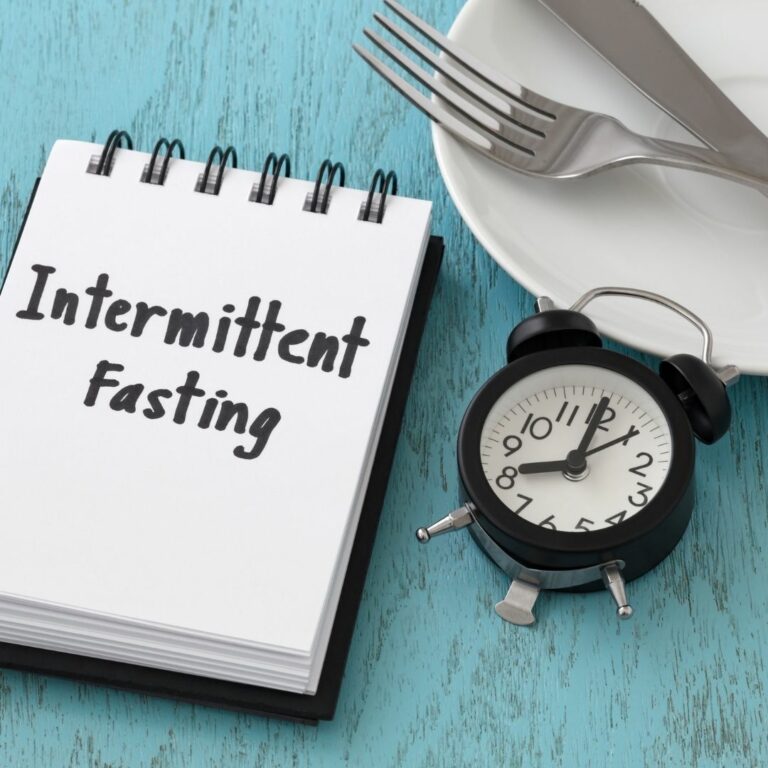
Intermittent fasting is an eating pattern in which you alternate between eating periods and fasting periods. Intermittent Fasting can be used as a technique to lose weight, improve your health and extend your lifespan.
Although many studies have shown the benefits of intermittent fasting, keep in mind that intermittent fasting is not for everyone and can be dangerous for some. In particular, children, pregnant and breastfeeding women, underweight people and people with eating disorders should not practice intermittent fasting.
It is a natural process that has been practiced throughout history and can be practiced daily or periodically. Intermittent fasting is less about what you eat and more about when you eat. Intermittent fasting can last a few hours (from dinner to “break fast”) or last a few weeks. Always consult a doctor before fasting for longer than 48 hours. But fortunately there are also easier and shorter ways to fast.
Intermittent fasting schedule
Before we get into the science and benefits of intermittent fasting, let's explain the common intermittent fasting schedules
Short fasting schedule – shorter than 24 hours
- 16:8 – Also known as the “8-hour eating window”
This daily fasting of 16 hours is the most common and can be done daily by most people. This means limiting your eating to an 8-hour period – the most common period is from 12:00 PM to 8:00 PM. It is highly recommended to eat healthy during the eating window and not skip meals
- 20:4 – “4-hour eating period”
Similar to the above fast, except the window for consuming meals is 4 hours. This usually means eating only 1 to 2 large meals per day. To balance this more difficult fasting schedule, many participants do this 3 to 5 days a week instead of 7, with the other days being “normal” eating days.
Long fasting schedule – longer than 24 hours
- The 24-hour fast – Fasting from dinner to dinner.
Similar to the 20:4 fast, except the period is strictly limited to one meal. Participants often do this 1 to 3 times a week - 5:2 Fasting
This is a weekly schedule with 5 normal eating days and 2 fasting days per week. During the two fasting days, you can consume 500 calories each day. The 500 calories can be consumed in one meal or spread throughout the day. - Fast for 36 hours
This means that you don't eat for a whole day. For example, the last meal is dinner on day 1 and you don't eat again until breakfast on day 3.
Fasting for 36 hours is more difficult, but gives your body the benefit of not eating for a whole day and the extra sleep cycle during fasting. - Fasting for longer than 48 hours
If you plan on fasting for more than 48 hours, you will need a consult a doctor who can give you advice and supplements to prevent malnutrition. Prolonged fasting without proper guidance and preparation can be harmful to your health, both in the short and long term. Although not recommended for everyone, prolonged fasting is possible and can be beneficial. Many people can safely fast for 7 to 14 days
Intermittent fasting benefits
Dietary interventions involving long fasting periods have shown promise in addressing a host of health problems that underlie metabolic syndrome, cardiovascular disease, cancer and even nervous disorders. Although the exact mechanism is not yet fully understood, this periodic absence of food intake appears to ameliorate multiple disease risks and, in some cases, reverse the progression of disease in mice and humans.
All benefits at a glance
- Detoxing the body
- Removal of pathogens
- Renewal of old and dysfunctional cells
- Reduction of bone and muscle atrophy
- Prevention of neurodegenerative diseases (e.g. Alzheimer's, Parkinson's)
- Cancer prevention
- Prevention Insulin resistance and type 2 diabetes
- Improvement of the glycemic index
- Reduces elevated liver values (ALT) non-alcoholic fatty liver
- Reversal of the aging process
- Extension of lifespan
- Sharper focus
- Mental clarity
- Increased productivity
Multiple studies have scientifically proven that calorie restriction and intermittent fasting can lead to a number of health benefits. We'll break down each of these benefits into specific components so you can better understand what happens in your body and cells when you fast.
Intermittent fasting disadvantages
While intermittent fasting can provide many health benefits, such as weight loss and improved metabolic health, there are also some disadvantages that some people experience. One of the most common disadvantages is the feeling of hunger and fatigue during the fasting period, which can lead to reduced concentration and performance. In addition, it can be difficult for some people to get used to this eating pattern, especially in the beginning. It can also lead to unhealthy eating habits such as overeating during meal times or skipping important nutrients. The macro calculator can help you get the right macro ingredients
Intermittent fasting: Losing weight
Weight loss is the most obvious result of intermittent fasting. If you eat less time in a day, you will probably also reduce your calorie intake. Additionally, many people find intermittent fasting an easier way to restrict calories than eating less at each meal.
Why are you losing weight?
On a standard low-calorie diet, you stop at every meal to avoid feeling full. You need to practice self-control several times a day. With intermittent fasting you simply don't eat during the fasting period. Once it's time to eat, you can eat until you're full.
In addition, your stomach shrinks during periods of fasting. When it's time to eat, your stomach can't absorb as much because it becomes smaller. This means you need less food to feel full. Note: Make sure you don't binge eat when you break your fast. Not only does fasting become less effective, it also gives you a stomach ache.

Intermittent Fasting: Autophagy
The benefits of intermittent fasting go beyond just reducing your calories. Fasting changes your hormones, recycles old cells and can even positively change your gene expression to extend lifespan. Your body makes these changes in a state of stress (starvation) so that your fat cells are more easily available for your body to 'eat for fuel'.
What is Autophagy?
Autophagy comes from the Greek word autóphagos which means “self-destruction”. It is the naturally occurring process of your cells breaking down and recycling their old cell components. It is a natural form of cellular cleansing.
Autophagy happens whether you are fasting or not, but it happens at an increased rate during fasting. During autophagy, your body breaks down the old components of your cell and converts them into amino acids. Those amino acids are then delivered to the liver for gluconeogenesis, or they are converted into energy for your brain and body.
Intermittent Fasting and the Human Growth Hormone
Studies have found an increase in growth hormone release during fasting. Often the increase can be 5x higher than before. Increased levels of human growth hormone help to increase muscle mass, burn fat and even increase your libido.A common misconception is that intermittent fasting causes you to lose muscle mass. However, some studies have shown that intermittent fasting, as long as you exercise regularly, is more effective for maintaining lean muscle mass than a regular caloric restrictive diet.
Intermittent Fasting: Longer life expectancy
A study from the National Institute of Aging found that mice who ate the same amount of calories but did so only once a day lived an average of 11% longer than those who ate the same amount of calories throughout the day.
Mice that combined a 30% calorie restriction with the intermittent fasting regimen of one meal per day had an average increase in lifespan of 28% compared to mice that followed a normal diet. The reason for this may be that fasting promotes an increase in the NAD+/NADH ratio and activates Sirt1.
Intermittent Fasting + NMN + Resveratrol + TMG (Harvard Longevity Research)
Intermittent fasting contributes to the increase in sirtuins sirt1, but sirtuins can also be stimulated by ingesting the nutritional molecules NMN and resveratrol.
Sirtuins are a group of genes that regulate the aging process. Sirtuins are found in all organisms and sense when we are hungry or when we exercise and give us the signals necessary to defend ourselves against aging and disease. The reason for this may be that fasting promotes an increase in the NAD+/NADH ratio and activates Sirt1.
Resveratrol
David Sinclair, Ph.D., A.O. is a professor in the Department of Genetics and co-director of the Paul F. Glenn Center for the Biology of Aging at Harvard Medical School. He comparest reseveratrol with the accelerator for the Sirtuin genes and NMN as the accelerator. So you need both to drive the production of Sirtuins. According to David Sinclair, there are longevity benefits to intermittent fasting and longevity benefits to taking the molecules NMN and resveratrol. Even better, when NMN and resveratrol are combined with intermittent fasting, the benefits are additive. This means that NMN + resveratrol + intermittent fasting can take you even further than normal fasting. Read everything about how NMN works in our article; What is NMN?
Trimethylglycine (TMG) also called Betaine
While taking NMN and Resveratrol to improve NAD+ in the body is great, David Sinclair also emphasizes taking Trimethylglycine (TMG) together. NAD+ boosters like NMN can ultimately drain the body's pool of methyl groups. When NAD+ is broken down, it produces Nicotinamide (NAM). The body then links a methyl to NAM to safely extract it through the kidneys. Methyl linked to NAM makes methylnicotinamide (MeNAM). This means that as more NAD+ is used, an increasing amount of methyl is required to safely get rid of NAM. This is the reason why David Sinclair takes supplements for TMG, together with NMN. Support and strengthen intermittent fasting with TMG, Resveratrol and NMN
How to start intermittent fasting?
Again, fasting isn't for everyone and it's always best to consult a doctor before making any major changes to your diet or lifestyle. Children, pregnant women, breastfeeding women, underweight people and people with eating disorders should not start intermittent fasting.
For those ready to get started, here are some steps to get started:
- Choose a fasting schedule. If you're just starting out, we recommend trying the 16:8 for a week to see how you feel. From there you can experiment and find out what's best for your health, schedule, and willpower.
- Keep track of your energy levels, weight, and mental and emotional state through a diary.
- Seek medical advice if you plan to fast for long periods of time.
- Additional bonus: Order NMN and Resveratrol or to simply increase your health benefits of intermittent fasting.
What is the best thing to eat to break your intermittent fast?
Here are some common, healthy options for breaking a fast:
- Apple Cider Vinegar* (does not break the fast)
- Avocado
- Leafy green lettuce
- Fermented foods (yogurt, sauerkraut, etc.)
What you eat after you break the fast is incredibly important. When we eat, our insulin levels increase. Insulin is the key that opens the door to your cells and allows glucose to enter your cells and be converted into energy.
Intermittent fasting increases your insulin sensitivity. Increased insulin sensitivity means your cells will absorb the nutrients you eat more effectively. So, eat your first meal sensibly and take Magnesium after your meal to improve insulin sensitivity.
Intermittent fasting questions and answers
Black coffee, tea and water are all fine to drink and are not considered breaking the fast. Of course it is not allowed to add milk or sugar.
Drinking alcohol breaks the fast. So you cannot drink alcohol during your fasting period. You can drink alcohol during your meal.
However, be careful, eat a meal before drinking alcohol and take it easy. Intermittent fasting can increase your sensitivity to alcohol. Drinking too much and too quickly during intermittent fasting can make you feel worse than expected in the morning.
Fasting is not only for weight loss, but also has the ability to prevent diseases and delay aging. Long-term fasting can be more difficult or dangerous for people who don't have much body fat to use for fuel. However, fasting can still be a safe and healthy exercise for those who are not overweight.
If you use intermittent fasting correctly, your metabolism will not slow down. Some studies show that intermittent fasting actually increases your metabolism.
- Hungry
- Headache
- Constipation
- Dizziness
- Muscle cramps
For fasts lasting less than 48 hours, these side effects are usually not serious. If symptoms persist, or if you plan to fast for more than 48 hours, consult a doctor.
When you wake up, start drinking 1 liter of water. This prevents you from feeling hungry. With short-term fasting, it's all mental. Hunger comes in waves and does not get exponentially worse. In fact, with longer fasts, people say their hunger goes away after the first few days. Do your best to ignore hunger.
Yet, with that said, hunger is often difficult to ignore. If you feel hungry during intermittent fasting, try drinking plenty of water or having a cup of coffee. Also, set your mind on a task and stay busy to keep your mind off the food.
There are certain foods that are not good to consume as part of an intermittent fasting regimen. You should stay away from foods that are high in calories and contain a lot of sugar, fat and salt. They don't nourish you after fasting, and can even make you hungrier.
Fasting every day can seem quite extreme, so it is not recommended for beginners. With this method, you may go to bed very hungry several times a week, which is not very pleasant and probably not sustainable in the long term. Build it up slowly!
Both NMN as Resveratrol and TMG (betaine) enhance the health benefits of fasting. You can take them without breaking the fast. After your first meal we recommend taking Magnesium to improve your insulin sensitivity.
No, definitely not! As long as you get enough nutrients outside of fasting, intermittent fasting is not bad for your health, but actually good.
Conclusion
Intermittent Fasting is a great way to lose weight, replenish your cells, and hopefully extend your lifespan. However, intermittent fasting is not for everyone. Ultimately, health is all about healthy eating, getting enough sleep, reducing stress and finding the right balance.
The best way to know if intermittent fasting is for you is to try it out and see how it goes. If you try it, we'd love to hear what your experience is?