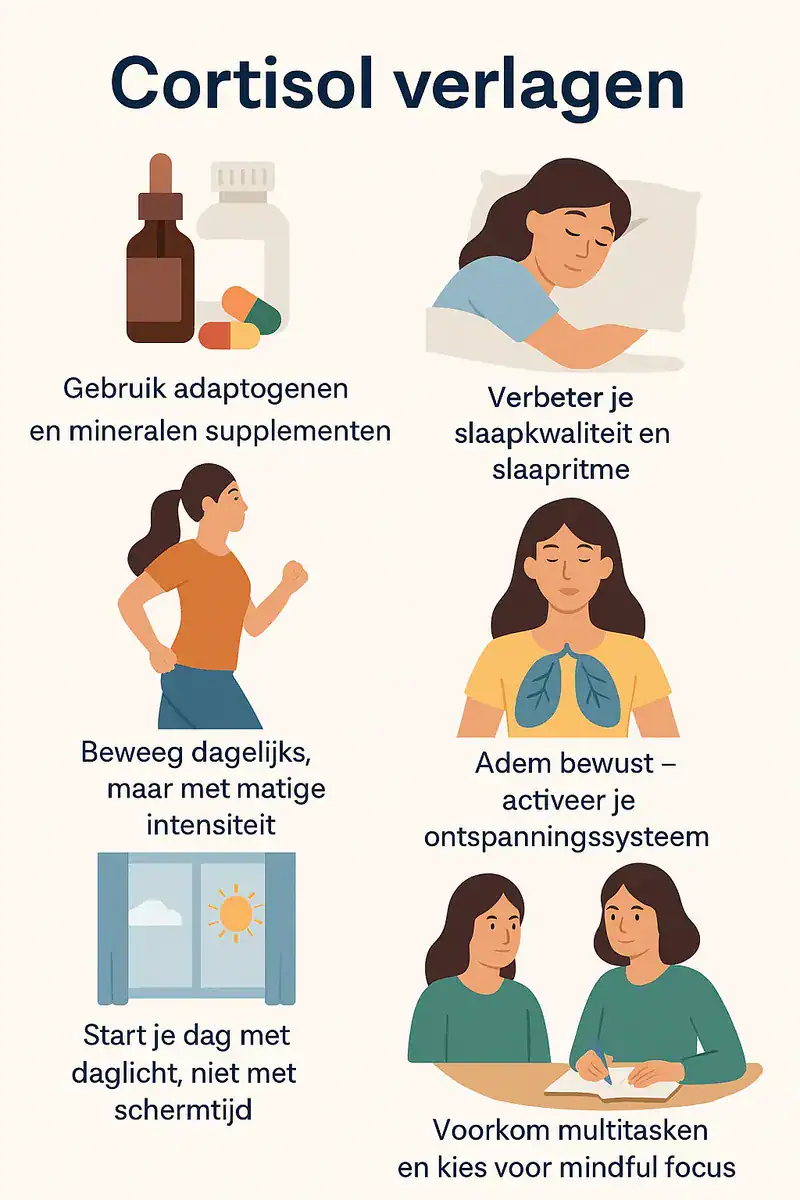
Why lowering cortisol is essential for your health
Excessive cortisol levels – the stress hormone – can lead to weight gain, belly fat, reduced sleep quality, fatigue and a hormone imbalance. By actively lowering your cortisol levels with breathing exercises, meditation or a healthy lifestyle, you support your immune system, improve your mental focus and protect your body against the harmful effects of chronic stress. Lowering cortisol is therefore a key to more peace, energy and vitality.
Lower cortisol with 19 tips
1. Use adaptogens and mineral supplements
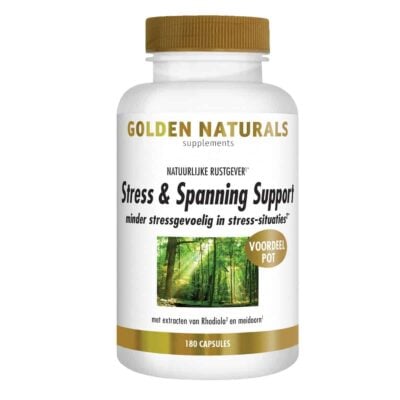
Adaptogenic herbs help your body adapt to stress and support a healthy hormonal balance. This has been proven effective in lowering cortisol and helps the body cope better with physical and mental stress. Do you want to know which supplements can help you with this?Send us a WhatsApp

2. Improve your sleep quality and sleep rhythm
Cortisol follows a natural day-night rhythm and is strongly influenced by your sleep. Poor sleep quality or insufficient rest can lead to chronically elevated cortisol levels. Have a fixed bedtime, avoid blue light in the evening and create a dark, quiet sleeping environment.
3. Exercise daily, but at moderate intensity
Regular exercise lowers cortisol, provided it is not too intensive. Choose walking, gentle yoga or tai chi. Extremely intensive training can cause a temporary increase in cortisol, especially if recovery is insufficient.
4. Eat blood stabilizing foods
Stable blood sugar levels help the body stay calm. Combine healthy fats, complex carbohydrates and protein in every meal. Avoid fast sugars and excessive caffeine. Magnesium-rich foods, such as leafy vegetables, nuts and seeds, support relaxation.
5. Breathe consciously – activate your relaxation system
Deep, slow breathing activates the vagus nerve, the part of your nervous system that regulates recovery and rest. Breathing techniques such as 4-7-8 or box breathing can cause a noticeable drop in stress and heart rate within a few minutes.
6. Start your day with light and rest, not with stress
A rushed start to the day increases your cortisol. Try to start your morning quietly, without screens or hectic. Natural daylight in the morning helps synchronize your biological clock and ensures a healthy cortisol curve.
7. Support your gut and microbiome
A healthy intestinal flora contributes to stress resistance and hormonal balance. Fermentation products such as kefir, sauerkraut and kimchi, and fiber-rich foods such as oats and vegetables help keep the microbiome in balance. Consider probiotics for intestinal complaints or chronic stress.
8. Limit caffeine and alcohol intake
Both caffeine and alcohol can increase cortisol levels, especially in sensitive people. Avoid caffeine on an empty stomach and drink alcohol in moderation. Herbal teas such as chamomile or tulsi are a soothing alternative.
9. Plan conscious recovery moments in your day
Stress becomes harmful when there are no moments of recovery. Consciously take short breaks, breathe deeply in the fresh air or close your eyes for a moment. These small interruptions help reset your system and prevent chronic overload.
10. Strengthen your adrenal glands with targeted nutrients
The adrenal glands play a central role in cortisol production. Support them with nutrition rich in vitamin C, B5, B6 and zinc. Think of citrus fruit, avocado, eggs, whole grains and pumpkin seeds. A supplement can provide support for persistent fatigue.
11. Create a digital world with fewer pings and vibrations
Constant notifications, screen lights and social media cause chronic anxiety. Turn off notifications, use blue light filters and plan digital detox moments. Digital rest gives your brain space to recover.
12. Stimulate oxytocin and serotonin through touch and connection
Social connection activates relaxation hormones such as oxytocin and serotonin. Cuddling, laughing, talking to loved ones or even spending time with a pet can noticeably reduce stress levels.
13. Use aromatherapy for hormonal relaxation
Essential oils such as lavender, sandalwood or bergamot influence the limbic system in your brain. This part regulates emotions and stress. Use a diffuser or apply a few drops to your wrists for a soothing effect.
14. Bring rhythm to your day – structure your stress response
The body likes predictability. Eat, sleep and exercise at regular times. Rhythm helps keep your internal clock in balance and prevents peaks in stress hormones at unexpected times.
15. Hydrate consistently to support your hormonal balance
Even mild dehydration increases physiological stress and therefore cortisol. Drink water regularly, especially with coffee, exercise or heat. If necessary, add lemon or a pinch of sea salt to replenish electrolytes.
16. Start a daily journaling or gratitude routine
Writing down your thoughts or gratitude helps your brain focus on positive emotions. This reduces stress, improves mood and makes you more resilient to future stimuli. Start with 3 things you are grateful for.
17. Reduce exposure to environmental stressors
Noise, bright lights or chemical smells can trigger subtle but constant stress responses. Make your living environment calmer: use soft lighting, natural materials and avoid synthetic perfumes or cleaning products.
18. Use cold therapy or contrast showers wisely
Cold stimuli strengthen your resilience and nervous system. Start with a cold shower for 30 seconds and build up slowly. The temporary stress response leads to reduced basal cortisol and increased dopamine afterwards.
19. Avoid multitasking and choose mindful focus
Multitasking increases mental noise and activates stress systems. By focusing on one task at a time (monotasking), you calm your brain and you can work more efficiently and calmly. This reduces the cortisol load during the day.
Frequently Asked Questions: How to Lower Cortisol?
How can I quickly lower my cortisol levels?
Deep breathing exercises such as the 4-7-8 technique can lower your cortisol levels in minutes.
Which supplements help lower cortisol?
Ashwagandha, rhodiola, magnesium and omega-3 fatty acids are effective in regulating cortisol.
Which foods lower cortisol levels?
Fatty fish, leafy vegetables, nuts and whole grains contribute to lower cortisol levels.
Which exercises are effective to reduce cortisol?
Walking, yoga and tai chi have been proven to reduce stress and cortisol.
How does sleep affect my cortisol levels?
Poor or insufficient sleep increases cortisol; good sleep helps regulate it properly.
Which breathing techniques help lower cortisol?
Box breathing and 4-7-8 breathing activate the relaxation nervous system and lower cortisol.
What are the symptoms of high cortisol levels?
Common symptoms include belly fat, sleep problems, fatigue and mood swings.
How do I measure my cortisol level at home?
You can measure your levels at home with saliva or blood test kits available online.
Can stress increase my cortisol for a long time?
Yes, chronic stress keeps your cortisol elevated for a long time, resulting in health risks.
How does caffeine affect my cortisol levels?
Caffeine can temporarily increase your cortisol, especially when consumed in excess.
What is the relationship between cortisol and belly fat?
Increased cortisol stimulates fat storage around your abdominal area, also called visceral fat.
How does meditation help lower cortisol?
Meditation_reduces_stress activates the parasympathetic nervous system, which reduces cortisol.
Is it possible to lower cortisol without medication?
Yes, with lifestyle interventions such as nutrition, sleep, exercise and stress management.
What role does diet play in regulating cortisol?
Healthy food helps keep your blood sugar and hormonal balance stable, which dampens cortisol.
How does alcohol consumption affect my cortisol levels?
Alcohol can increase your cortisol levels, especially when used regularly or in excess.
What are natural ways to reduce cortisol?
Gentle exercise, healthy nutrition, adaptogens, meditation and sufficient sleep are effective.
How long does it take for cortisol levels to drop after stress?
With acute stress, cortisol drops within hours, with chronic stress this can take weeks.
What role do adaptogens play in lowering cortisol?
Adaptogens help your body cope better with stress and thus indirectly lower your cortisol.
How does exercise affect my cortisol levels?
Moderate exercise lowers cortisol, intensive training temporarily increases it.
What are the long-term effects of increased cortisol levels?
Long-term high cortisol leads to high blood pressure, weight gain and weakened immune systems.