Contents and ingredients
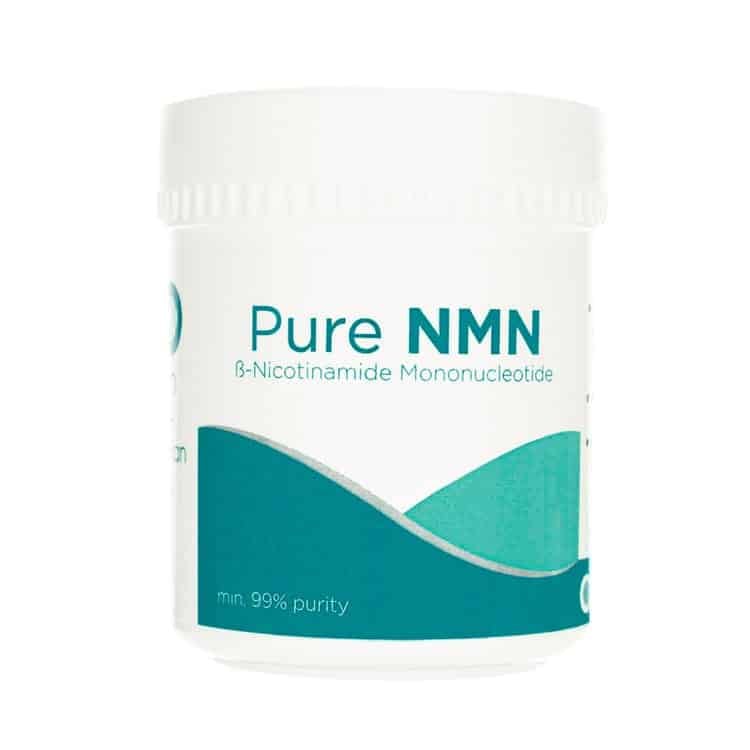
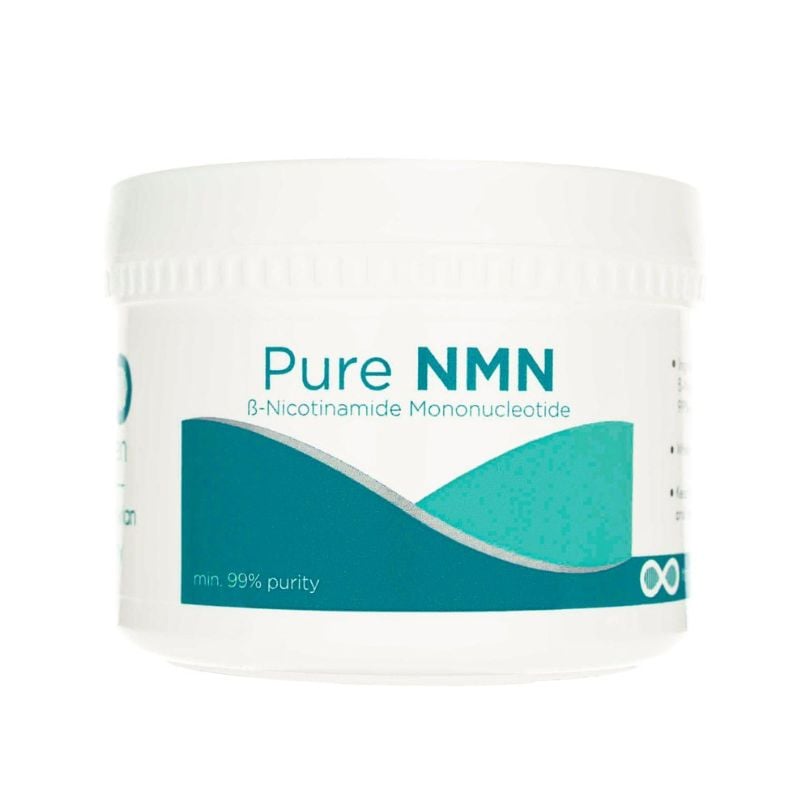
Hansen NMN powder verkrijgbaar in 30 g en 100 g verpakkingen
It pure NMN-powder van Hansen is available in 30 grams and 100 grams packaging. Both sizes are airtight and specially designed
to chemical stability and purity to be retained for a long time.
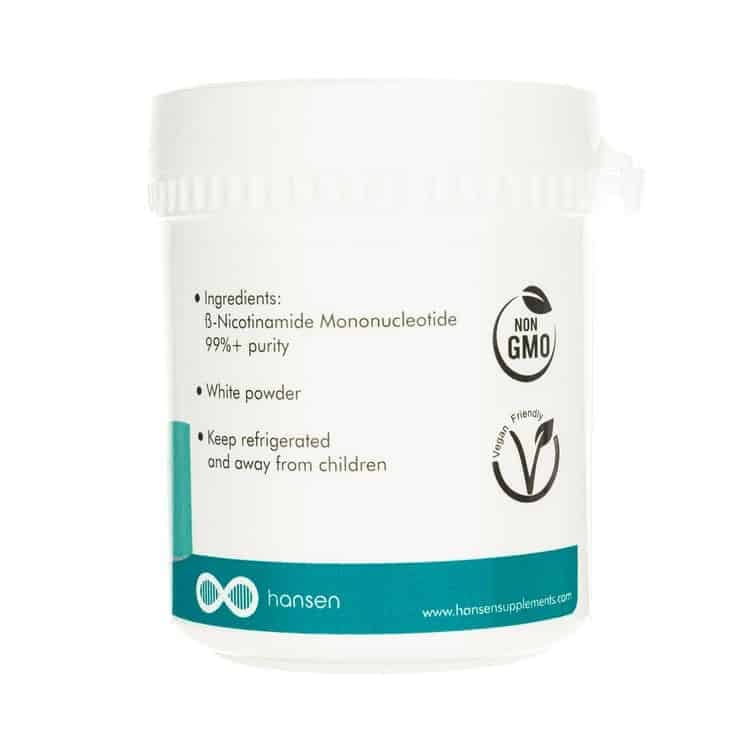
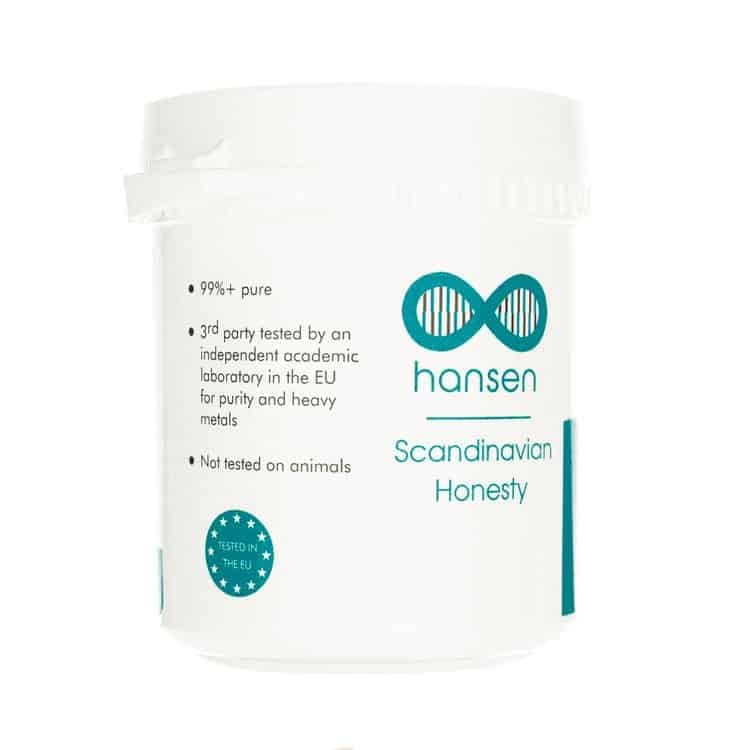
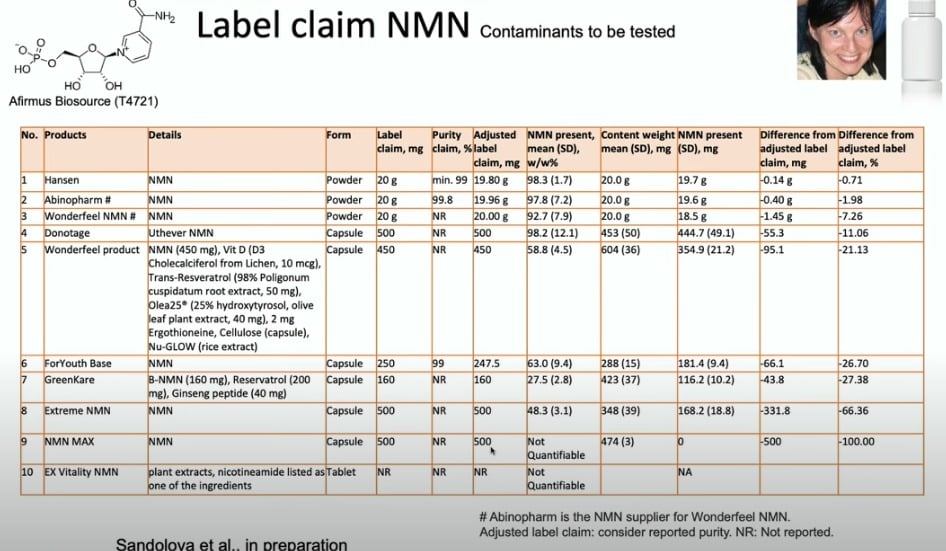
Each batch has one guaranteed purity of ≥99%, confirmed by independent laboratories within the European Union. Dit maakt Hansen NMN geschikt voor wie waarde hecht aan transparency, reproducibility and controlled quality.
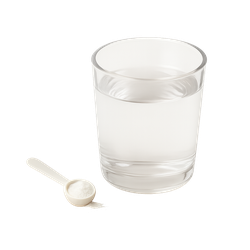
One is included with each package precision spoon (measuring spoon) supplied so that the NMN powder can be measured accurately. One level spoon contains approx 400 mg NMN, which allows for consistent dosing.
NMN powder or capsules?
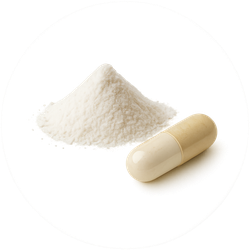
NMN is available as pure powder and if NMN capsules. Both forms contain nicotinamide mononucleotide, but differ mainly in ease of use, freedom of dosage and personal preference. NMN powder is interesting for those who want flexible dosing, while capsules are useful for those who want to use a fixed amount per intake.
- NMN powder – flexible to dose and suitable for those who want to adjust the quantity themselves
- NMN capsules – practical for daily use, without weighing or measuring spoon
- 500mg per capsule – a fixed dose within a simple supplement routine
Would you rather not use powder? Then also view our NMN capsules with 500 mg nicotinamide mononucleotide. These are available in 90 or 180 vegetable pullulan capsules.
What is it?
What is NMN (Nicotinamide Mononucleotide)?
NMN stands for Nicotinamide Mononucleotide and is a natural substance that has gained worldwide fame since 2019 through groundbreaking research, including on the Harvard University led by Prof. Dr. David Sinclair.
NMN is a derivative of niacin (vitamin B3) and plays an essential role in it cellular energy metabolism. It is a direct precursor of NAD+ (Nicotinamide Adenine Dinucleotide), a coenzyme essential for:
- Energy production in the mitochondria
- Repair of DNA damage
- Healthy cell function and aging inhibition
NMN is efficiently converted into NMN in the body NAD+, a substance that is present in all body cells and is involved in hundreds of biological processes.
Can you get NMN from food?
NMN occurs naturally in small amounts in certain foods, such as:
- 🥦 Broccoli
- 🥑 Avocado
- 🌿 Cabbage and edamame
- 🍅 Tomatoes
- 🍄 Mushrooms
How is NMN produced?
There are two methods to obtain NMN:
- Enzymatic synthesis: through the enzyme NMNAT, dat nicotinamide riboside (NR) combineert met fosfaatgroepen.
- Extraction from plant sources: such as broccoli and avocado, although the concentrations are very low.
NMN vs NR
NR (Nicotinamide Riboside) is another NAD+ precursor, present in milk and yeast, among others. NR is verkrijgbaar als supplement, but research shows that NMN is converted more effectively into NAD+ in people.
Legislation surrounding NMN in Europe
Despite numerous positive scientific studies, it is no longer permitted to sell NMN as a dietary supplement in the European Union since the end of 2022.
However, the quality is unchanged. Our NMN powder continues to meet the highest standards, with a guaranteed purity of ≥99%, confirmed by independent laboratories.
Since the new regulations, our NMN has been sold exclusively as chemical reference substance for research purposes and analytical applications. Use for human consumption is not permitted by law.
Technical specifications
- Substance name: β-Nicotinamide Mononucleotide (β-NMN)
- CAS number: 1094-61-7
- Molecular Formula (Hill Notation): C11H15N2O8P
- PubChem Substance ID: 24897645
What does scientific research say about NMN?
According to the current European legislation no health claims may be made about it NMN (β-Nicotinamide Mononucleotide), because this substance has not (yet) been approved as a food supplement within the EU.
In the United States NMN, on the other hand, is actively investigated, including in the context of possible application as pharmaceutical substance. International researchers study NMN in relation to cellular processes such as energy metabolism, DNA maintenance and aging mechanisms.
If you would like to delve further into the scientific literature surrounding NMN,
can use independent and reputable sources:
Liposomal NMN has no proven added value
There exists no scientific evidence in the PubMed database showing that
liposomal NMN is better absorbed than regular NMN powder form.
The liposomal variant is mainly offered for: marketing and price positioning reasons. All published clinical studies — in both animals and humans — have been conducted with non-liposomal, pure NMN.
Also Prof. Dr. David Sinclair (Harvard University), an internationally recognized authority in aging research, uses exclusively pure NMN powder and not liposomal variants.
User information
What dosage of NMN is used in scientific research?
NMN powder is often dissolved in water or used directly under the tongue for best absorption. The measuring spoon contains approximately 500 mg
For NMN (β-Nicotinamide Mononucleotide) currently exists no officially established recommended daily allowance. Within the European Union NMN is not yet recognized as a dietary supplement, so no official guidelines for use have been established.
In international scientific and clinical studies However, fixed dose ranges are studied. A large proportion of these studies examine quantities on the order of magnitude 600 to 1000 mg NMN per day.
These quantities are discussed in research in relation to fundamental ones cellular processes such as energy metabolism, NAD+-metabolism and biological aging mechanisms. However, from these studies no direct conclusions for personal use are drawn.
When do people usually take NMN?
Within research settings, the timing of NMN is not always explicitly stated. In practice, many users choose to use NMN in the morning to take, because NAD+-related processes are part of the body's natural day-night rhythm.
At higher quantities, some users choose to increase the quantity Divide over two moments per day. For example, part in the morning and part later in the day.
NMN on an empty stomach or with food?
The scientific literature does not always specify whether NMN should be taken with food. Some users take NMN on an empty stomach, while others combine it with a meal. Both ways occur.